EGRUiEN project at prestigious SASE and IMI conferences!
The first event took place on 14 May 2026 and was convened by the Institute of the Motor Industry (IMI) at their London HQ as a high-level policy panel discussion on the future of automotive workforce safety and competence in the EV transition.
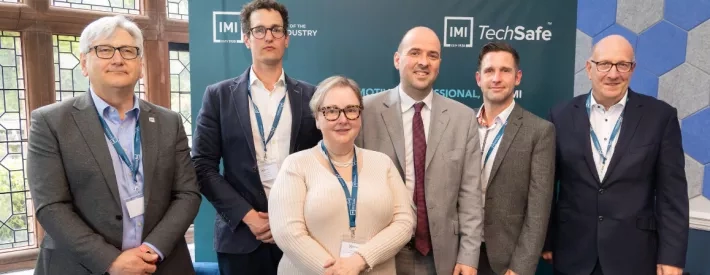
The event was held in London and consisted of a focused policy discussion and stakeholder exchange. While the precise duration was not formally reported, the activity involved an extended panel session followed by discussion among participants, enabling in-depth engagement with policy, regulatory, and workforce development issues associated with connected, automated, electric, and alternative-fuel vehicles.
The activity was hosted and organised by the Institute of the Motor Industry (IMI) as a high-level policy discussion examining workforce competence and safety in the context of emerging vehicle technologies. The event brought together senior stakeholders from across the automotive sector, including industry leaders, policymakers, legal specialists, fleet operators, and academic researchers.
Participants included:
- Rt Hon Richard Holden MP, Shadow Secretary of State for Transport
- Nick Connor, Chief Executive Officer, Institute of the Motor Industry (IMI)
- Dr Louis Lines, Cardiff University and EGRUiEN Project
- Matt Cleevely, Managing Director, Cleevely Electric Vehicles
- Nona Bowkis, Head of Legal Services and Solicitor, Lawgistics
- Vincent St Claire, Managing Director, Fleet Assist
The event facilitated dialogue between policymakers, employers, sector bodies, and researchers on the workforce implications of electrification, connected vehicles, automated driving systems, and alternative fuel technologies.
Relation to EGRUiEN:
The event was not organised by EGRUiEN, but participation by Dr Louis Lines (Cardiff University) formed part of EGRUiEN dissemination and stakeholder engagement activities. The discussion addressed several themes directly relevant to EGRUiEN research, including skills transformation, workforce adaptation, technological change, and governance challenges associated with the green and digital transitions in the automotive sector.
Participation in the event contributed to EGRUiEN's dissemination and stakeholder engagement objectives by facilitating direct interaction with senior policymakers and industry representatives on issues central to the green and digital transitions.
The activity was a high-level policy panel discussion and stakeholder meeting hosted by the Institute of the Motor Industry (IMI). The event focused on the future of workforce competence, skills regulation, and safety standards in the context of rapidly evolving automotive technologies.
Convened by IMI Chief Executive Nick Connor, the discussion brought together senior representatives from government, industry, legal services, fleet operations, and academia, including Rt Hon Richard Holden MP, Shadow Secretary of State for Transport. The meeting examined the implications of electrification, connected vehicles, automated driving technologies, alternative fuels, and digitalisation for the automotive workforce. Particular attention was given to emerging regulatory challenges and the need to ensure that technicians responsible for maintaining, repairing, diagnosing, and recovering increasingly complex vehicles possess demonstrable and auditable competencies.
A key outcome of the discussion was broad agreement among participants that workforce competence should become a more prominent element of automotive regulation. Participants discussed the potential role of the IMI's TechSafe standard as a mechanism for assuring competence across electric vehicles, connected and automated vehicle systems, and alternative fuel technologies. The event also explored the implementation of the Automated Vehicles Act 2024 as a potential policy framework through which workforce competence standards could be embedded within future regulatory arrangements.
The event was convened by the Institute of the Motor Industry (IMI) to address the growing challenges that technological change poses for workforce competence, public safety, and regulatory oversight within the automotive sector’s EV transition. As vehicles increasingly incorporate advanced software systems, connectivity features, automated driving functions, electrified powertrains, and alternative fuel technologies, participants examined whether existing skills frameworks and regulatory arrangements remain sufficient to ensure safe maintenance, repair, diagnostics, and recovery activities.
Particular attention was given to the widening gap between the growing technical complexity of modern vehicles and the availability of appropriately trained personnel, especially in relation to electric vehicle technologies.The event concluded with broad consensus that government intervention is required to ensure demonstrable and auditable workforce competence in safety-critical areas of the automotive industry. Participants highlighted the IMI's TechSafe standard as a practical mechanism for verifying workforce competence and identified the implementation of the Automated Vehicles Act 2024 as a potential policy opportunity through which competence requirements could be embedded within future regulatory frameworks. More broadly, the discussion emphasised that workforce skills, professional standards, and consumer confidence must be treated as integral components of the automotive sector's green and digital transition.
To see more, click on the link
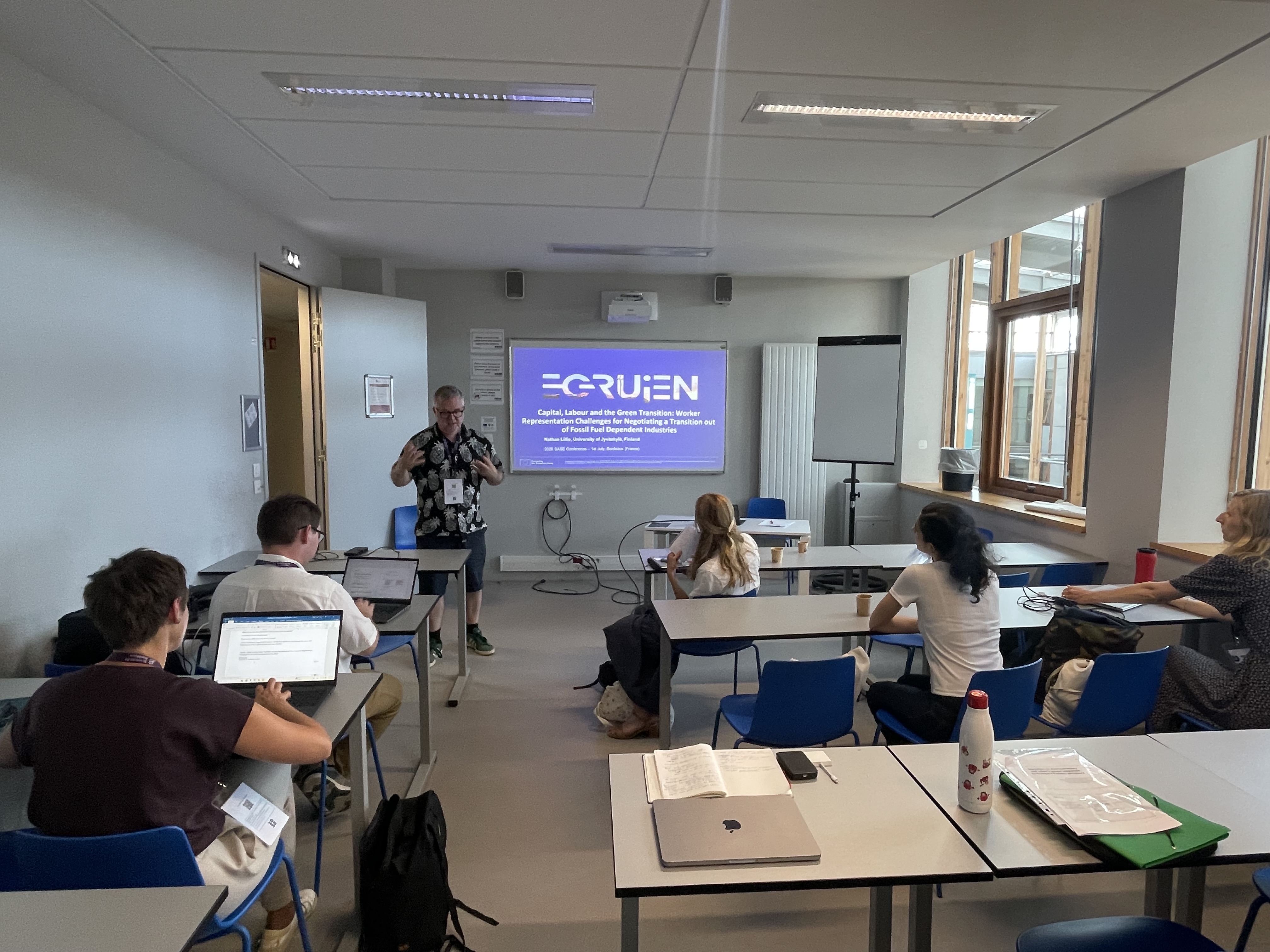
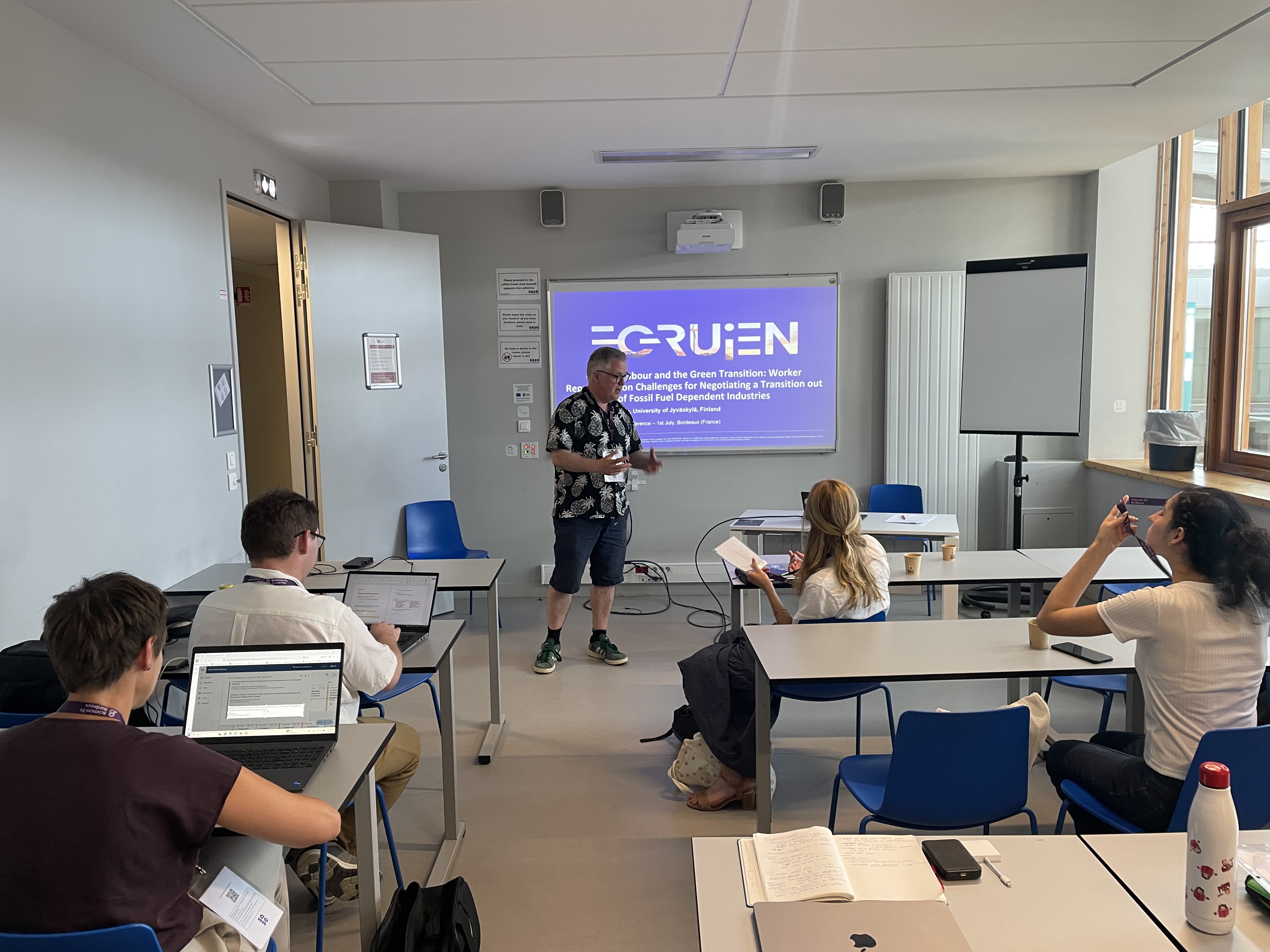
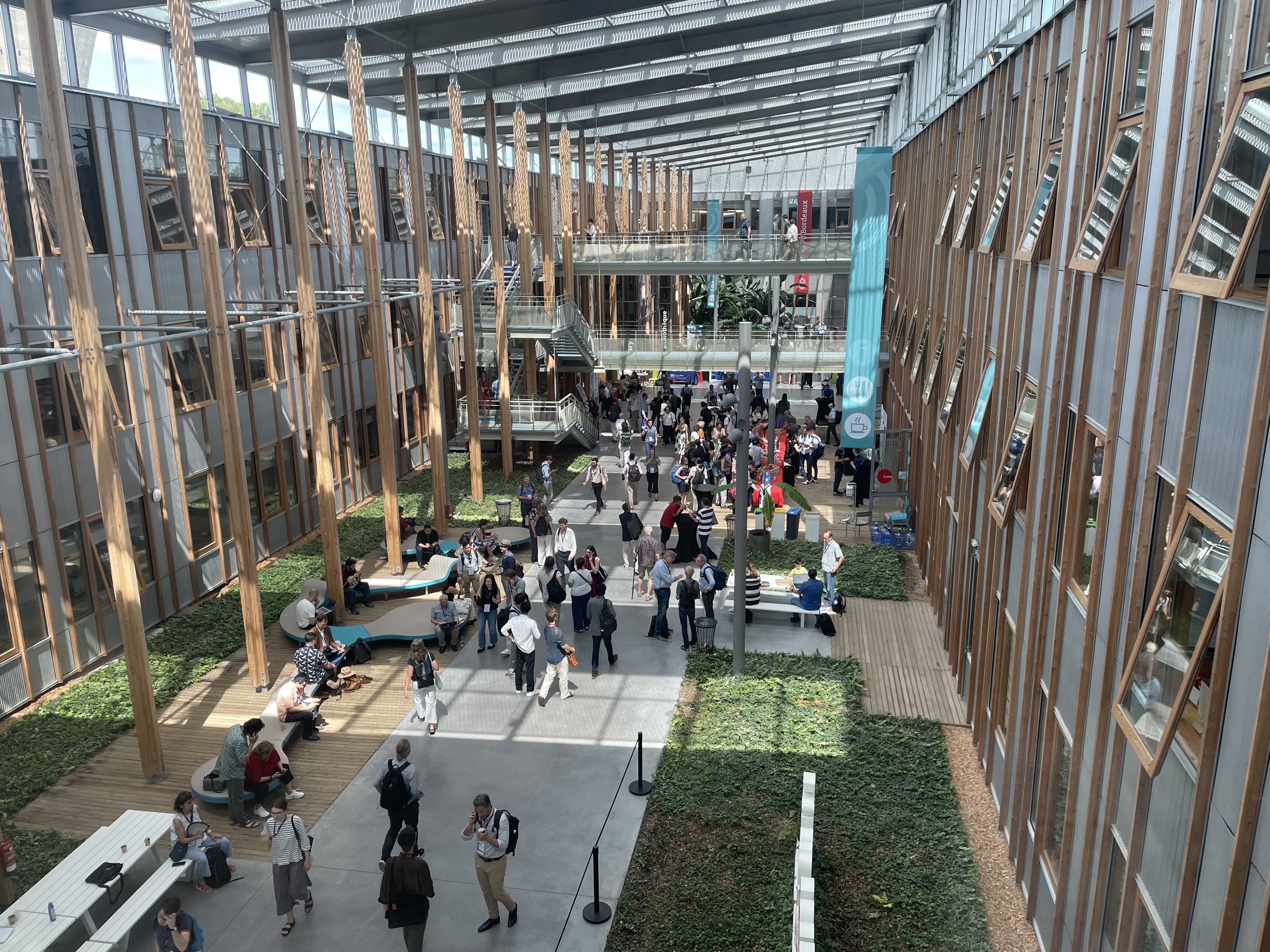
The SASE Conference 2026 was held in Bordeaux on July 1-4. The 38th edition was titled: Fighting Divisions: Conflict and Power in a Post Globalisation Order. Our project was present during the symposium: Negotiating a Fourth Industrial Revolution: is Social Dialogue for Fair Green and Digital Transition possible?: Panel #1 (moderated by Nathan Lillie from JYU).
The second part of the same symposium - Negotiating a Fourth Industrial Revolution: is Social Dialogue for Fair Green and Digital Transition possible?: Panel #2- was moderated by Kairit Kall
The description of the panel:
The green transition has long been an objective of ecological policy, to reduce the levels of CO2 emissions produced by economic activity, under an assumption of trade-offs between economic growth and CO2 reduction. With the cost of wind and solar now in most cases lower than fossil fuels, fossil fuels dependent capital now finds itself disrupted, as new energy production alternatives outcompete them, adding to the political demands put on these industries. Fossil-fuel dependent industries have been strongholds of unionization in Europe, providing high paying blue collar jobs. It is an open question whether new energy production will do the same. Whether new energy jobs rise to replace the old ones, or not, we are entering a period of intensified “creative destruction” (Schumpeter 1942), raising the prospect that the greening of industry will also be a cause of precaritization. Unions and policy makers in some cases have tried to mitigate the effects of job losses on workers and communities by negotiating the transition, and there are reasons for optimism in some cases. At the same time, digital technologies such as AI are also disrupting many industries. Digital tech is supporting and reinforcing the deployment and use of renewables, and related technologies, but its impact in replacing, reconfiguring and intensifying work generally is broad, perhaps even universal. Digital technologies facilitate the introduction of green ones such as distributed energy storage, but also enable management to replace and surveil workers in new ways. AI also depends on green energy development for access to cheap electricity. The green and digital transitions are therefore bound up together in fourth industrial revolution, implying broad and fundamental changes to the way in the economy works – and as with past industrial revolutions we can expect changes to the way social institutions such as unions and welfare states function. Just as disruption of legacy firms and production processes puts pressure on unions and social dialogue institutions to respond strongly with innovative solutions, the increasing precarity of workers caused by the same disruption reduces the power of unions and thrusts many workers outside the circle of production inherent in primary labour markets. The question of how to protect the rights of workers during the green and digital transition is therefore the subject of these dual panels, “Negotiating a Fourth Industrial Revolution: Panel 1 and Panel 2”. Panel 1 consists of three papers and Panel 2 of four. The papers draw on research from three Horizon Europe projects, EGRUiEN, Encouraging a Digital and Green Transition through Revitalised and Inclusive Union-Employer Negotiations, INTEGRATE Integrating Diversity in Social Dialogue, and ISABEL mInimize coSts and mAximize Benefits in the transitionary European regional Labour markets. There are four case studies of transitioning firms and regions, and the social dialogue and policy negotiations around these. There are two analyses of the dynamics and power shifts which result from the introduction of new technologies, and one empirical study of where the jobs are going from, where to, and the implications of that. Discussing these papers together, we hope to achieve a perspective on how the fourth industrial revolution is affecting workers, and how social dialogue institutions can guide the process to prevent or mitigate the precarity arising from the process of creative destruction.The first part consisted of the papers presented by the members of our project partners:
- Strong unions, green capitalism and securitization of politics: negotiating green transition in Estonia, Ida-Virumaa region: Kairit Kall, Eeva Kesküla, Jelena Helemäe, Tallinn University, Estonia
- Negotiating coal-phase out: the role of the social partners and other actors in the process of transformation: Monika Martišková, Pavol Bors, Central European Labour Studies Institute, Slovakia
- From Centralised Energy to Dispersed Labour | Social Dialogue in the UK’s Offshore Wind Transition: Louis Lines, Marco Hauptmeier, Cardiff University, United KingdomThe second part consisted of the following papers:
- The digital footprints on social dialogue practices and its implications for modern industrial citizenship: Trine Pernille Larsen1, Emily Erickson1, Maarten Keune21 University of Warwick, United Kingdom. 2 University of Amsterdam, Netherlands
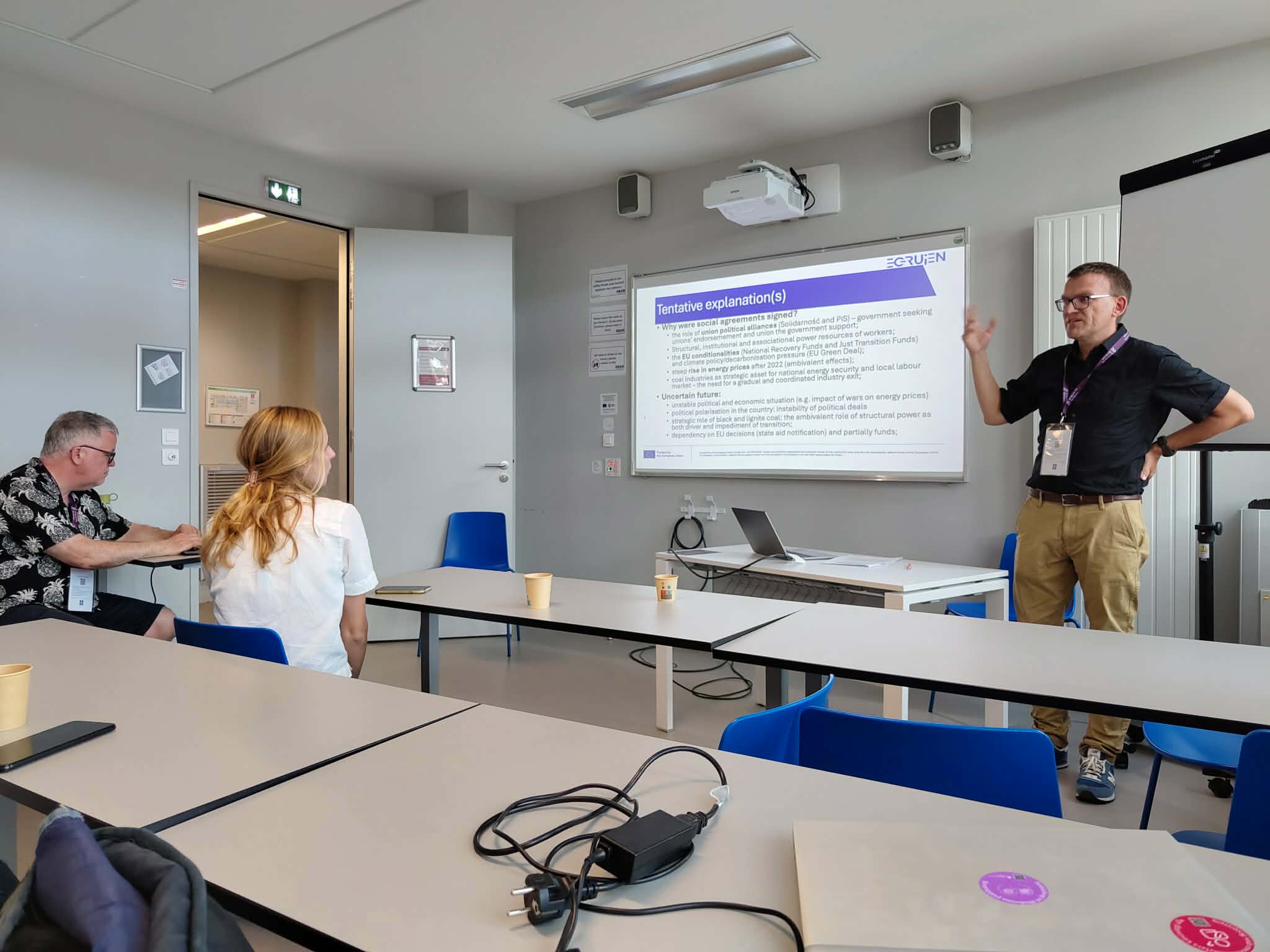
- Dangerous Liaisons? Trade Unions, Green Transition and Institutional Experimentation with Social Pacts in Mining Sector in Poland: Adam Mrozowicki, Szymon Pilch, Jacek Burski, University of Wrocław, Poland
- Capital, Labour and the Green Transition: Worker Representation Challenges for Negotiating a Transition out of Fossil Fuel Dependent Industries: Nathan Lillie, University of Jyväskylä, Finland
Apart of that, Adam Mrozowicki (together with Imre Szabo1, Vera Scepanovic2, Corvinus University of Budapest, Hungary. 2 Leiden University, Netherlands. 3 , and Szymon Pilch, Wrocław University, Poland) a member of the UWr team also copresented a paper titled "The return of industrial policy and labor’s power resources on the EU's Eastern periphery" during the panel: "Regional Models of Capitalism: Extending the Growth Model Approach Beyond the National Economy" moderated by Aidan Regan.